


Portable toilets and showers are designed to work almost anywhere. Construction sites, festivals, remote projects, and temporary facilities all rely on them. But behind every unit is a system that manages the most important part of sanitation, which is waste.
At Instant Toilets & Showers, we work with a range of waste management solutions designed for different environments and usage levels. In this guide, we break down how integrated waste tanks work and why they’re commonly used across events, worksites, and temporary infrastructure setups.
What is an Integrated Waste Tank?
An integrated waste tank is a self-contained system designed to collect and store wastewater from portable sanitation units such as toilets, showers, and ablution blocks. Instead of connecting directly to a mains sewer or septic system, wastewater flows into a sealed holding tank that can be safely stored on site until it’s professionally emptied.
Integrated waste tanks come in a range of sizes depending on demand. Smaller tanks are often built directly into portable toilets, while larger modular tanks are used for high-traffic facilities. At Instant Toilets & Showers, our NeoLav modular waste tanks are available in sizes such as 2000L, 4000L, and 6000L, providing scalable waste storage for larger sites and extended use.
How an Integrated Waste Tank Works

Integrated waste tanks follow a simple but effective process that allows portable sanitation systems to operate without a permanent sewer connection. Here’s how the system typically works.
- Waste enters from the toilet or shower
When a portable toilet is flushed or a shower is used, wastewater flows through the unit’s plumbing outlet. Depending on the setup, this may come from a single toilet, multiple units, or an entire ablution block.
- Waste flows into a sealed holding tank
The wastewater is directed into an integrated holding tank. This tank is fully sealed and designed to safely store liquid waste until it can be serviced.
- A venting system regulates airflow
Waste tanks include a ventilation system that allows gases to escape while maintaining safe internal pressure. This helps minimise odours and keeps the system functioning efficiently.
- Chemical treatment supports waste management
In many portable sanitation systems, sanitation chemicals are used to control bacteria, reduce odours, and help break down waste inside the tank.
- Pump-out access allows servicing
When the tank approaches capacity, a service team connects to the pump-out fitting and removes the stored waste using specialised equipment. The tank can then be cleaned and returned to service.
Key Components of an Integrated Waste Tank System
While the overall system is straightforward, several key components work together to ensure integrated waste tanks operate safely and reliably.
Holding Tank
The holding tank is the main storage chamber where wastewater is collected. These tanks are designed to be durable, sealed, and capable of handling high volumes of liquid waste without leaks or contamination.
Vent System
A built-in vent allows gases to safely escape while maintaining balanced internal pressure. Proper ventilation helps reduce odour build-up and keeps the system operating efficiently.
Seals & Gaskets
A built-in vent allows gases to safely escape while maintaining balanced internal pressure. Proper ventilation helps reduce odour build-up and keeps the system operating efficiently.
Pump-Out Fitting
The pump-out fitting provides a secure access point for waste removal. Service teams connect specialised equipment here to safely extract and dispose of the stored wastewater.
Capacity and Usage Considerations
Integrated waste tanks come in different sizes, and choosing the right capacity depends on how the sanitation setup will be used. Tank capacity is typically measured in litres, indicating how much wastewater the tank can safely hold before servicing is required.
Several factors influence how quickly a tank fills.
- The number of users plays a major role, especially on busy worksites or large public events.
- Event or project duration also matters, as longer deployments naturally generate more wastewater over time.
- The type of facilities connected to the tank can also affect usage. Portable toilets generally produce less wastewater than showers or full ablution blocks, which include basins and multiple outlets.
- Site conditions such as servicing access and usage patterns may also impact scheduling. For larger or high-traffic setups, regular servicing ensures the system continues operating smoothly.
If you’re unsure how many facilities your site may need, our guide on how many toilets you need can help with planning.
Integrated vs Separate Waste Systems
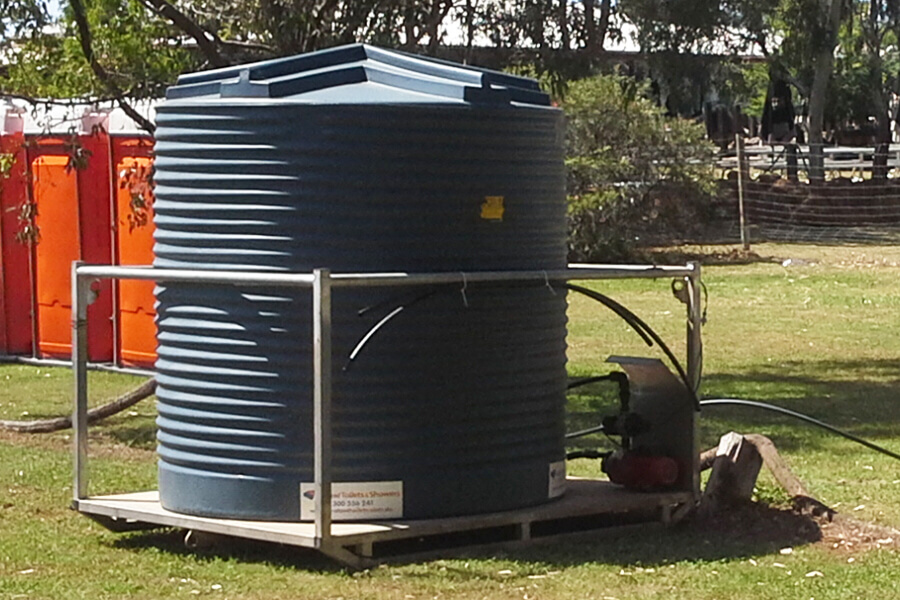
When planning portable sanitation, waste can be managed using either an integrated tank or a separate external tank system. Both options store wastewater safely until it can be pumped out, but they differ in setup and typical use cases.
| Feature | Integrated Tank | Separate Tank |
| Setup | Simple | More components |
| Mobility | High | Lower |
| Best for | Events, temporary sites | Large infrastructure |
| Servicing | Pump-out | Pump-out |
Integrated waste tanks are often the preferred option for events, construction sites, and temporary facilities where quick installation and mobility are important. Because the tank is built into or directly connected to the sanitation setup, it reduces the amount of equipment required on site while still providing reliable waste storage and straightforward servicing.
Common Questions About Integrated Waste Tanks
Does it smell?
When properly maintained, integrated waste tanks are designed to minimise odours. Sealed tank construction, ventilation systems, and sanitation chemicals all work together to control smells and maintain hygienic conditions.
How often does it need emptying?
Servicing frequency depends on tank size, number of users, and the type of site. For events and public gatherings, servicing may be required every 6 to 12 hours depending on attendance and local regulations. On construction sites, servicing is typically scheduled weekly, although higher worker numbers may require more frequent pump-outs to remain compliant.
Is it environmentally safe?
Yes. Waste tanks are fully sealed to prevent leaks and contamination. Waste is professionally removed and transported for proper treatment and disposal.
Is it compliant for public events?
Integrated waste systems are widely used at public events and worksites, provided they are correctly sized, maintained, and serviced according to local health and safety requirements.
Reliable Waste Solutions from Instant Toilets & Showers

Integrated waste tanks play an essential role in keeping portable toilets and showers running safely and efficiently.
At Instant Toilets & Showers, we supply portable toilets, portable showers, and modular waste tanks that work together as a complete sanitation solution for events, construction sites, and remote projects.
If you’re planning a site setup and need reliable facilities, explore our portable toilets for hire or portable showers for hire, or call us on 08 9406 6600 for expert advice on the right waste management system for your project.